
Hillman Never Closed
For thirty years we have said a sitcom filled the HBCUs. The enrollment numbers are real. The proof never was — and the gap between them is the more interesting story.
On September 24, 1992, five months after a jury in Simi Valley acquitted four officers in the beating of Rodney King, a network sitcom opened its sixth season with its two leads on their honeymoon in Los Angeles, separated in the middle of a city on fire. Whitley Gilbert and Dwayne Wayne had spent five years being the most-argued-about couple on Black television, and the show sent them into the riots. Part one aired that Thursday. Part two the following week. NBC put it in the same slot where the country had watched them fall in love.
Nobody makes that episode without believing television can carry weight. *A Different World* had been built to carry it since Debbie Allen took the show over after a first season nobody defends, including the people who made it. What she is credited with — turning a *Cosby Show* spinoff about a rich girl at a Black college into the most honestly topical series of its era — is usually described as a matter of subject: date rape in season two, apartheid in season three, an HIV-positive student named Josie Webb in season four, colorism in season five. Allen has told it differently. In her own recent account, the biggest change she made was structural, not topical. She got the writers and the actors in the same room and kept them there, so the stories came out of what campus life actually was rather than what a writers' room assumed it to be. The politics followed from the process. That order matters, and almost every retelling gets it backwards.
The show did not become serious because someone decided to be serious. It became serious because it got accurate first.
It also, by every account anyone has ever offered, sent a generation to historically Black colleges. This is the part everyone knows. It is repeated in reunion specials, in university press releases, in the copy for the sequel arriving this month. And it is worth saying plainly, because it has never been said plainly enough: the enrollment numbers behind that claim are entirely real, and the proof that the show caused them does not exist.
Start with the numbers, because they are genuinely striking. The federal government has been counting. In 1976, total enrollment at degree-granting historically Black colleges and universities was 222,613. By 1980 it had climbed to 233,557, and then it fell — to 223,275 by 1986, essentially where it had been a decade earlier. A flat ten years, and a declining half-decade inside it. *A Different World* premiered in September 1987. By 1993, the year it went off the air, HBCU enrollment stood at 282,856. That is 59,581 additional students in seven years, a rise of roughly twenty-seven percent, arriving after a decade of nothing, landing precisely inside the window the show was on television. The National Center for Education Statistics, reporting the period from 1976 to 1994, noted that enrollment rose about twenty-six percent across those eighteen years but that virtually all of the increase occurred between 1986 and 1994.
Now the part that gets left out. No study has ever tested whether the show caused any of it. Not a peer-reviewed paper, not a dissertation, not an institutional analysis. The federal report that everyone quotes is a statistical compilation; it does not mention television, or popular culture, or Hillman College. It reports a correlation in time and stops, which is what statistical compilations are supposed to do. Everything past that point — the causation, the legend, the thirty-year certainty — has been supplied by journalists and by the people who made the show.
Look closely at how carefully the institutions themselves put it. Howard University, celebrating the series, quoted its president Ben Vinson III saying the show spurred a profound interest in what HBCUs have to offer, and that even thirty-five years later there are undergraduates on campus who cite *A Different World* as a reason for *considering* an HBCU education. Considering. Not enrolling. That is a president choosing his verb with precision. And on the same page where Howard repeats the twenty-six percent figure, the citation is not to Howard's own registrar. It is to CNN. The most celebrated HBCU in the country is sourcing the statistic about its own sector from a news network.
A university citing a cable channel for a number about itself is not a scandal. It is a tell. Nobody ever went and checked.
There are also confounders nobody controls for, because nobody ever ran the study that would have to. Black college-going rose broadly in the late 1980s for reasons that had nothing to do with Thursday nights. And the tidy version of the legend — that enrollment climbed while the show aired and fell when it ended — does not survive its own dataset. Enrollment dipped modestly after 1993, to 275,680 by 2000, and then kept climbing to an all-time high of 326,614 in 2010, seventeen years after cancellation. If a sitcom is responsible for the rise, something has to account for the peak that arrived nearly two decades after it left the air.
What is actually on the record is testimony, and it is more human than a regression line. Darryl M. Bell has said that not a day goes by, for anyone who worked on the show, without someone telling them they went to an HBCU because they watched it. The journalist Mark S. Luckie has written that he applied exclusively to historically Black colleges after visiting predominantly white campuses and seeing almost no one who looked like him, and that because of *A Different World* he knew he did not have to accept that. An alumna quoted in coverage of the anniversary credits Freddie specifically — Cree Summer's character — with teaching her she could follow her passion and keep her own sense of style while doing it, and applied to five HBCUs. Cast members report hearing, more than once, some version of *I am a doctor because I watched this show.*
That is not data. It is something else, and pretending it is data has always sold it short. A show cannot be proven to have moved a federal statistic. It can be proven, over and over, to have moved specific people who then tell you so unprompted, thirty years later, in an airport. The legend has spent three decades reaching for the bigger claim when the smaller one was never in doubt.
Which brings us to now, and to the least convenient fact in this entire story. There is a genuine surge in HBCU interest happening right now — a real one, documented at the institutional level. Hampton's applications went from thirteen thousand to seventeen thousand. Morehouse's rose from six thousand to more than eight, a thirty-four percent jump, and its first-year class came in nearly three hundred students over target. Howard went from thirty-three thousand applications to more than thirty-six. North Carolina A&T received twelve thousand additional applications and enrolled a *smaller* class, because it ran out of room. When demand outstrips a campus's physical capacity, that is not a marketing win. That is a sector being asked to absorb something it was never funded to absorb.
And every administrator on record attributes it to the same thing, and it is not nostalgia. Harry Williams of the Thurgood Marshall College Fund said that after the affirmative action ruling, interest in HBCUs is at an all-time high. Tashni-Ann Dubroy, an executive vice president at Howard, put it in seven words: nobody wants to go where they don't feel welcome. The current wave is not being driven by a television show. It is being driven by the Supreme Court, and by eighteen-year-olds doing an honest reading of which campuses want them there.
Hillman was never a recruiting brochure. It was an argument that these schools deserved a camera pointed at them for six years, on a Thursday, in front of everybody.
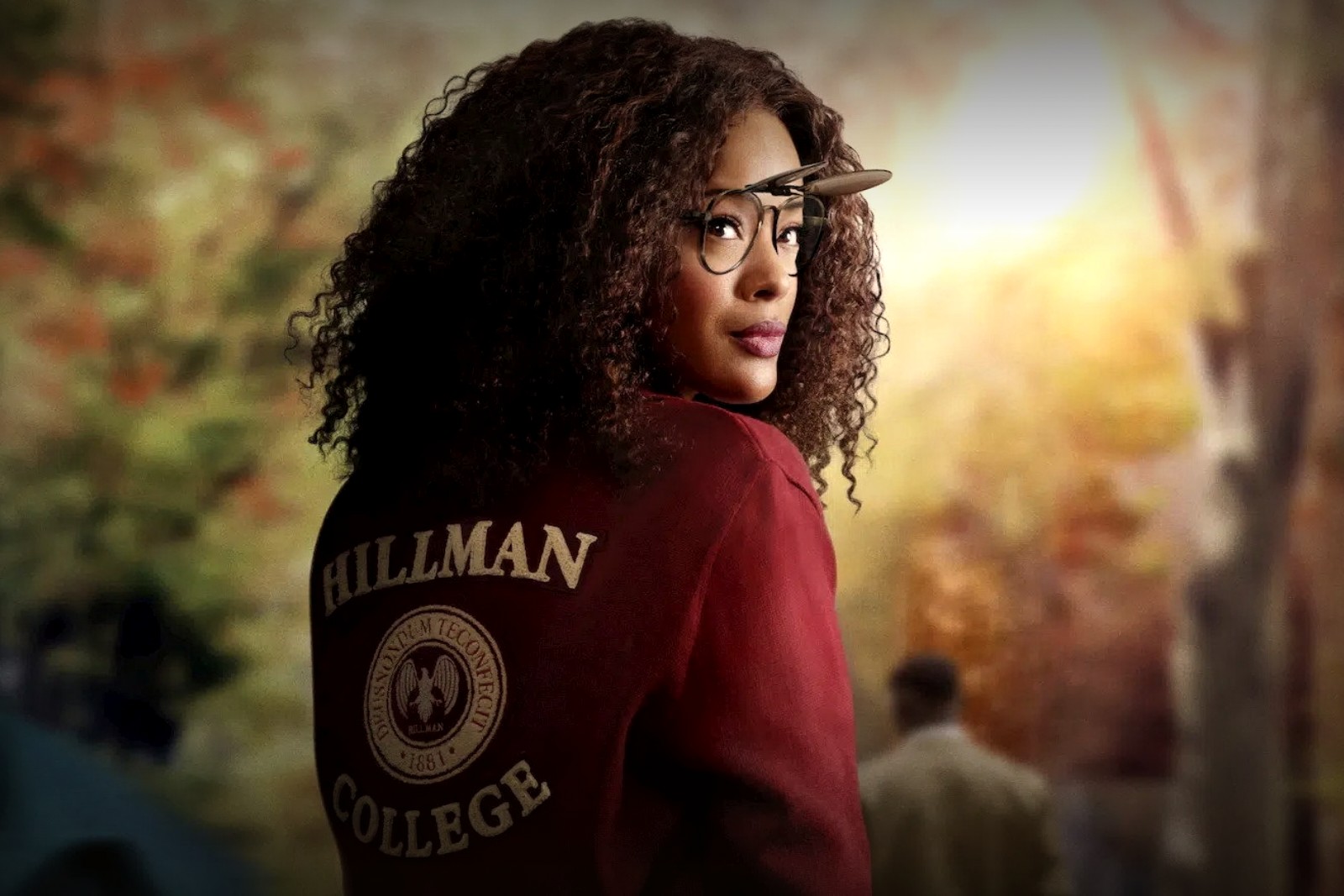
The sequel premieres on Netflix on September 24, thirty-nine years to the day after the original, and thirty-four years to the day after Whitley and Dwayne got caught in the riots. Netflix chose that date. Maleah Joi Moon plays Deborah Wayne, Dwayne and Whitley's daughter, starting her freshman year at Hillman. Kadeem Hardison, Jasmine Guy, Cree Summer, and Darryl M. Bell all return across the season. Felicia Pride runs it. Allen executive produces and directs three episodes. Brandy recorded a new version of the theme.
It will not be measured fairly. Somebody will run the enrollment numbers against it in 2029 and announce a verdict either way, and both verdicts will be built on the same missing study. The more useful question is the one the original actually answered, and the reason it still gets brought up in airports: whether a show can put a place on television so convincingly that people who had never considered it start to see themselves inside it. That was demonstrable in 1987 and it is demonstrable now. The classrooms filling up this fall are filling up for harder reasons than a sitcom. What the sitcom did — what it can do again — is make sure that when a seventeen-year-old finally goes looking, the picture in their head is already there.