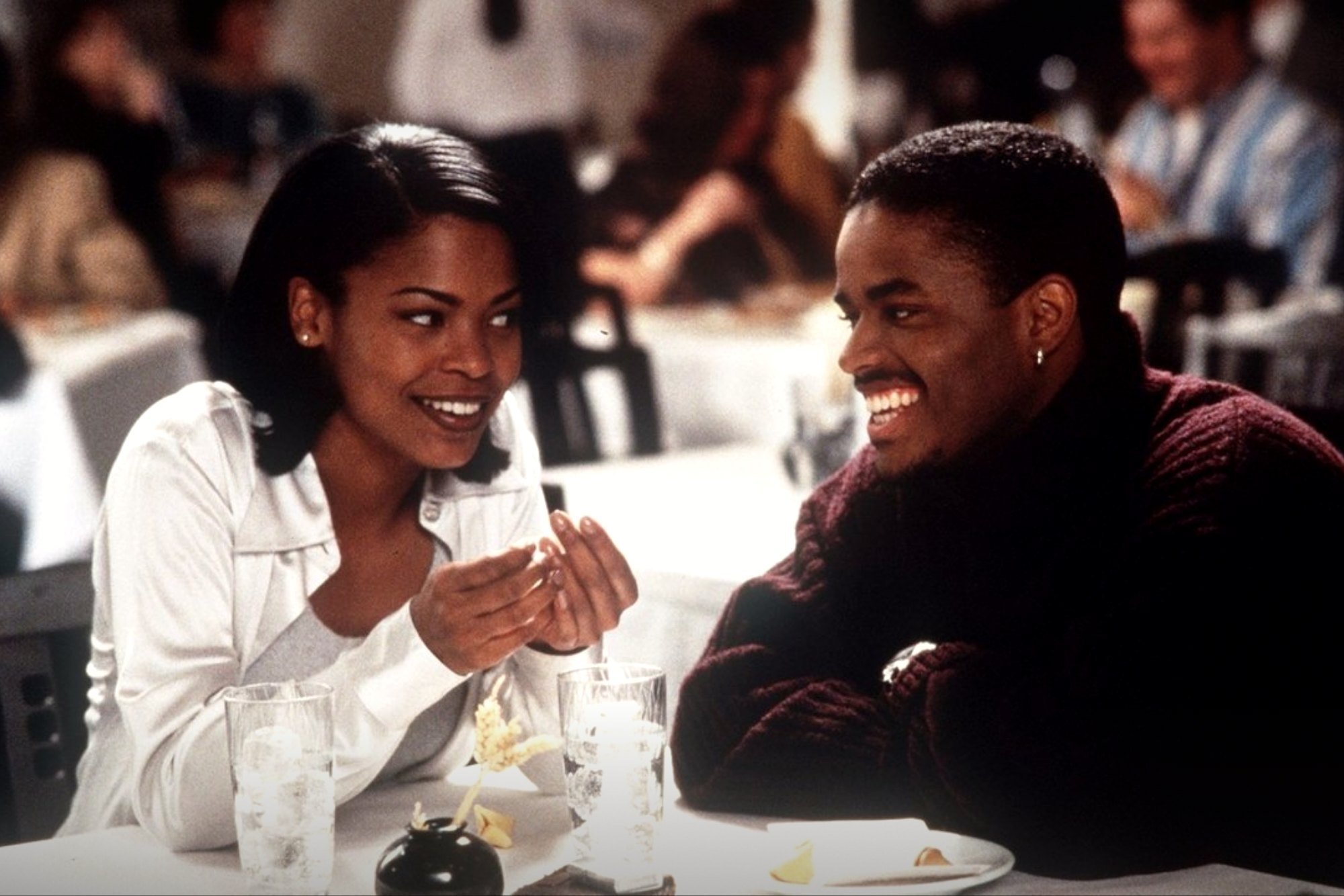
There is a scene in *Love Jones* where Darius reads a poem at an open mic and calls it "a little something for the sistas." It is soft and it is grown and it asks for nothing but attention. In 1997 that was practically radical: a Black film where the stakes were simply whether two people would stop being afraid of each other.
Almost thirty years later, we still don't get enough of it.
## Tenderness as a genre
*Love Jones* (Theodore Witcher's only feature — he never got the shot at a second) gave us Chicago, jazz, poetry, and grown people talking to each other like the conversation was the romance. Three years later Gina Prince-Bythewood made her directorial debut with *Love & Basketball* and split a whole life into quarters, letting Monica and Quincy love each other across two decades without ever once making it cute.
These films understood something the market keeps forgetting: for Black audiences, getting to see ordinary tenderness on screen — no trauma, no funeral, no lesson — is its own kind of luxury.
## The market keeps underwriting the wrong thing
Every year studios greenlight another Black film built around pain, because pain reads as *important* and importance reads as *awards*. Meanwhile the romances — the Sunday-afternoon, watch-it-nine-times, know-every-line romances — get made on shoestrings or not at all.
When one does slip through, it lands. *The Photograph* (2020) and Eugene Ashe's *Sylvie's Love* (2020) both proved there is a hungry audience for Black love shot like it's beautiful, because it is. But two films in a year is a trickle, not a canon.
## Joy is not a lesser subject
Here's the argument, plainly: a people who are constantly asked to justify their suffering on screen deserve — and will pay for — the right to watch themselves simply *want* each other. Black romance is not a break from serious cinema. It is the serious cinema of the interior life, the part of us that exists when no one is oppressing anyone.
We should fund it like we mean it. Until the industry does, we'll keep pulling these films up ourselves, one rewatch at a time.